Ever wondered why your money’s value seems to swing wildly when you travel? Exchange rates are always changing. This affects travelers, businesses, and investors in ways many don’t get.
Exchange rates show how much one currency is worth compared to another. They change due to many economic factors. Knowing about these changes can help you save money and make better choices with international money dealings.
Exchange rates are key for both travel and global trade. They’re not just random. They’re influenced by big economic forces and global events.
👉 Check live exchange rates instantly using our free currency converter
Key Takeaways
- Exchange rates change daily due to complex economic factors
- Global market conditions significantly impact currency values
- Understanding exchange rates can help save money on international transactions
- Economic indicators and political events influence currency pricing
- Currency markets operate 24/7 across different global financial centers
What Are Exchange Rates and How Do They Work?
Currency exchange is a world of financial interactions that affects global trade and travel. Knowing how exchange rates work helps people and businesses with international money matters.
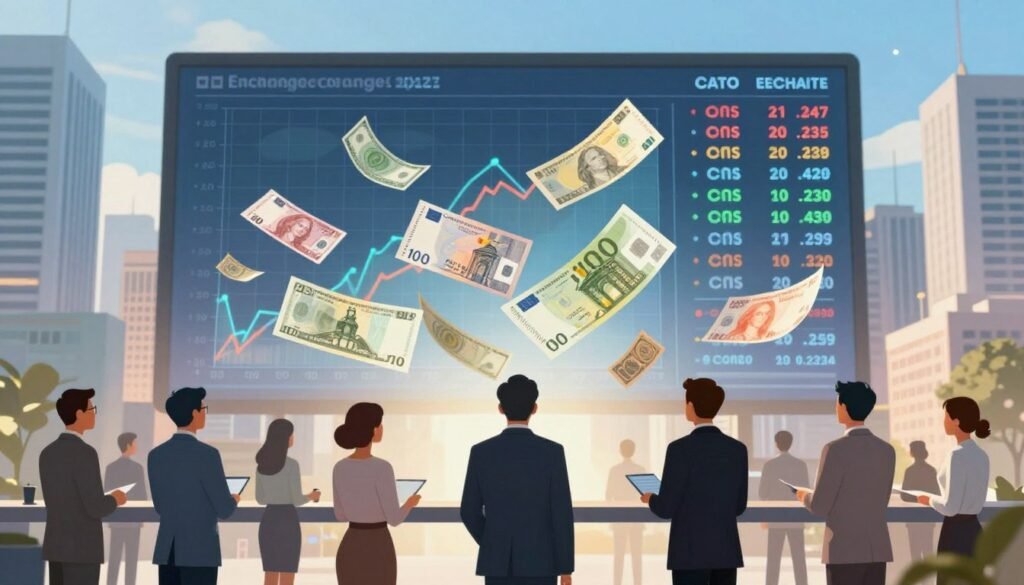
Exchange rates show the value of one currency against another. When you convert USD, EUR, or JPY, you get a specific rate. This rate tells you how much money you’ll get.
Currency Pair Fundamentals
Currency pairs compare the value of two different currencies. For instance, a USD/EUR rate of 1.05 means:
- $1 USD equals €0.95 EUR
- €1 EUR equals $1.05 USD
- Rates change often due to global market conditions
Spot Rates vs Forward Rates
There are two main types of exchange rates:
- Spot Rates: The current market value for immediate currency exchange
- Forward Rates: Future currency values based on expected economic conditions
For example, if the USD/EUR rate is 1.05, $200 will get you €190.48. This is from the simple formula: dollars ÷ exchange rate = euro.
The Role of Supply and Demand in Currency Markets
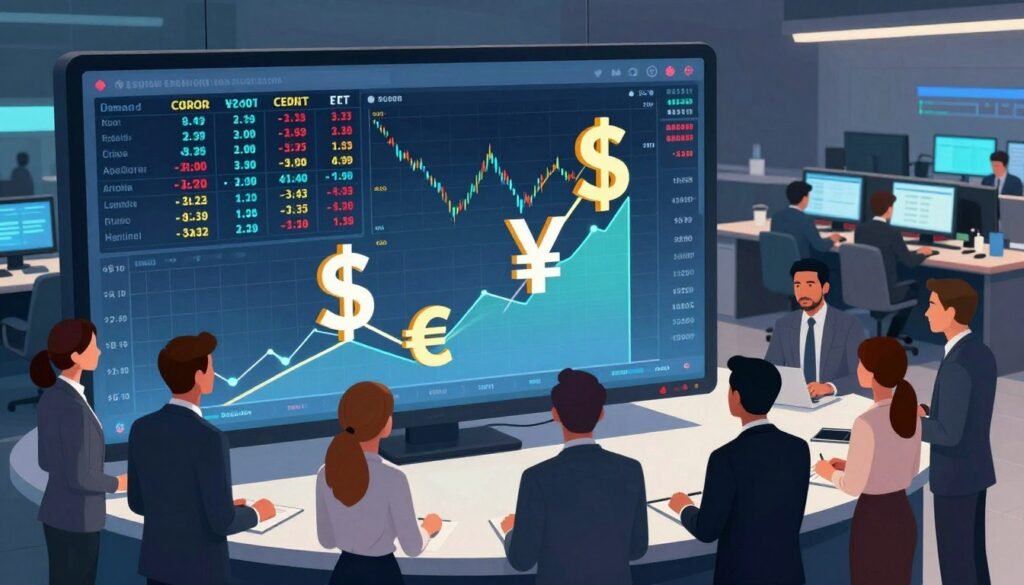
Currency markets are like a busy marketplace. Prices change as buyers and sellers interact. The basic rule is: more demand means a higher price. Less demand means a lower price.
Several key factors drive currency demand:
- International trade transactions
- Foreign investment opportunities
- Speculation about future currency value
- Global economic conditions
Countries with a trade surplus see more demand for their currency. Foreign buyers need these currencies to purchase goods and services. This increases the currency’s value. For instance, when German cars or Japanese electronics are in demand, euros or yen become more valuable.
On the other hand, countries with a trade deficit may see their currency value drop. When a nation imports more than it exports, it must sell its currency to buy foreign ones. This increases supply and can lower the currency’s value.
The global currency market operates 24/7, with exchange rates in constant motion driven by real-time supply and demand dynamics.
Knowing how supply and demand work helps investors and travelers. It lets them predict currency changes and make smart financial choices.
Why Do Exchange Rates Change Every Day? Explained Simply
Currency markets are always changing, with rates moving every minute. The world’s finances are influenced by many things. These include economic signs, trading, and quick information updates.
The 24-Hour Forex Market and Constant Trading Activity
The foreign exchange market never stops, working all day and night. It’s active in big financial places around the world. This means that currency values are always being checked and changed based on many factors:
- Global economic news
- Central bank interest rate decisions
- Geopolitical events
- Investor sentiment
How Economic Data Releases Impact Daily Rate Movements
Many important economic signs affect exchange rates every day. Monthly jobs reports, inflation figures, and trade balance data are key in setting currency values.
| Economic Indicator | Impact on Exchange Rates | Frequency |
|---|---|---|
| Central Bank Interest Rates | High direct impact | Quarterly |
| Monthly Jobs Reports | Moderate impact | Monthly |
| Inflation Figures | Significant impact | Monthly |
| Trade Balance Data | Moderate to high impact | Monthly |
Traders and investors look closely at these signs, making quick decisions. These decisions affect currency exchange rates. A rate checked on Monday might be very different from the same rate on Friday. This is because of new economic news or changes in market feelings.
Key Factors That Influence Exchange Rate Fluctuations
Currency values are like a complex puzzle, with many pieces always moving. Knowing what drives exchange rate changes helps investors and travelers make better choices.
Several key economic indicators shape currency strength:
- GDP Growth: A strong economy draws in investors, making a country’s currency more valuable
- Employment Rates: High job numbers mean a healthy economy and more spending power
- Manufacturing Output: Strong industrial production shows a country’s economy is doing well
👉 Convert currencies in real time and see today’s exchange rates here
Monetary policy is also a big player in exchange rates. Central bank decisions, like interest rates, can greatly affect currency values.
“Expectations often matter more than actual events in currency markets,”
financial experts often say.
Trade between countries adds complexity to currency markets. Imports, exports, and trade balances all affect exchange rates. Political stability is also key, with big events causing quick changes in currency values.
Market sentiment turns these technical factors into real currency movements. What traders think and expect can move exchange rates more than economic data.
- Inflation rates add to the complexity
- Political events can cause sudden currency changes
- Investor confidence is very important
The mix of these factors makes the currency world dynamic and always changing. No single factor works alone.
Interest Rates and Inflation: The Primary Drivers of Currency Value
Currency markets are complex ecosystems where economic policies play a big role. Understanding how interest rates and inflation work can help investors and travelers make better financial choices.
Central banks have a lot of power in shaping the economy. They watch economic indicators closely to manage interest rates and control inflation.
How Central Bank Policies Affect Exchange Rates
Big central banks like the Federal Reserve, European Central Bank, and Bank of England are key in managing their countries’ economies. They use interest rates as a main tool to shape economic conditions.
- Regular policy meetings assess current economic trends
- Decisions to raise or lower interest rates impact currency values
- Investors closely watch these announcements for possible opportunities
When a central bank raises interest rates, it makes that country’s financial tools more appealing to global investors. Higher rates attract international capital, boosting demand for the local currency and possibly strengthening its exchange rate.
The Relationship Between Interest Rates and Currency Demand
The link between interest rates and currency demand is clear. Investors look for higher returns, so they move funds to countries with better interest rates.
For instance, if US interest rates are 5% and European rates are 2%, investors will likely put more money into US dollar investments. This increase in dollar demand can make the currency stronger against other global currencies.
Central banks adjust interest rates to manage the economy:
- Raising rates to slow down an overheating economy
- Controlling inflation with monetary policy
- Stimulating economic growth when inflation is low
The Federal Reserve’s interest rate decisions can greatly affect the dollar’s global standing. This shows how closely currency values are linked to monetary policy.
Trade Balances and Political Events That Move Currency Markets
Understanding trade balances is key to seeing how currencies move in global markets. A country has a trade surplus if it sells more than it buys. On the other hand, a trade deficit happens when it imports more than it exports.
Currency values are tied to these trade dynamics. For example, when Germany sells cars to the United States, Americans need euros. This demand for euros makes the currency stronger.
- Trade surpluses show economic strength
- Strong exports can boost a currency’s value
- Countries like Japan and Germany have strong currencies due to their exports
Political events also affect currency markets. Investors watch for political stability and clear policies. They also look at government changes that could affect the economy.
| Political Event | Potential Currency Impact |
|---|---|
| National Elections | Potential currency volatility |
| Geopolitical Tensions | Increased market uncertainty |
| Policy Shifts | Immediate exchange rate adjustments |
Real-world examples show how political uncertainty can change exchange rates. Brexit made the British pound very volatile. US presidential elections have also affected the dollar’s value.
Currency markets favor stability. Countries with clear governance, policies, and strong institutions have more resilient currencies. Investors prefer places where they can predict their investments’ outcomes.
Common Mistakes People Make When Exchanging Currency
Currency exchange can be tricky and costly. Knowing how to handle international money transfers can save you a lot. This is true for both travelers and those buying things from other countries.
When you exchange currency, there are key things to watch out for. These can affect how much you spend.
Decoding Bank Fees and Exchange Rate Markups
Hidden costs can eat into your money when you exchange it. Travelers need to be careful about:
- Flat transaction fees that banks charge
- ATM withdrawal fees when using cards abroad
- Service charges for money transfers
Different places offer different rates for exchanging money. Airport currency exchanges and hotel exchange services usually have the worst rates with highest markups. Banks and special currency exchange services often have better deals.
👉 Convert USD, EUR, GBP, CAD, and more using our free currency converter
Strategic Timing for Currency Exchanges
It’s hard to predict exact exchange rate changes. But, there are smart ways to get more value from your money:
- Watch rates over several days
- Check rates at different times
- Look for services that let you set a target rate
For big exchanges, even small rate differences can save you a lot. It’s wise to shop around and plan your exchanges carefully. But, don’t stress too much about getting the perfect rate.
Knowing these common mistakes helps you keep more of your money when you exchange it internationally.
Conclusion
Exchange rates are complex and fascinating. They show the balance of economic forces around the world. These forces include market sentiment, central bank policies, and international trade.
Investors and travelers need to understand these changes. They affect currency values every minute. This knowledge helps in making smart financial decisions.
Global financial markets never stop moving. Currency values change with economic data, interest rates, and world events. Whether you’re traveling, doing business abroad, or just interested in global economics, tracking exchange rates is key.
Knowing how exchange rates work helps you make better choices. It shows you how to deal with currency changes. This includes understanding supply and demand, economic indicators, and market expectations.
Disclaimer: This content is for informational purposes only and should not be considered financial advice. Always consult with a qualified financial professional before making any investment or currency exchange decisions.