Ever wondered why the currency exchange rate online is different from what banks charge? Learning about mid-market exchange rates can help you understand these differences. It can also save you money on international deals.
When you travel or buy things from other countries, knowing about currency exchange is key. The forex mid-rate is the most honest and fair rate in the world market.
It’s not just for money experts to know about mid-market exchange rates. It’s useful for anyone who deals with international money, online shopping, or global business.
👉 Check live exchange rates instantly using our free currency converter
Key Takeaways
- Mid-market rates show the real value of currency exchanges
- These rates are the average between buying and selling prices
- Banks often add extra fees to their rates
- Knowing the mid-market rate helps you make better financial choices
- Exchange rates change based on global market conditions
What Is the Mid-Market Exchange Rate?
Understanding currency exchange can seem hard, but the mid-market exchange rate is simple. It shows the true currency value when currencies are traded. It’s like the best price for switching money between countries.

The currency exchange mid-point is found by averaging what buyers and sellers want. It’s like a financial market where traders negotiate prices live.
The Midpoint Between Buying and Selling Prices
Interbank exchange rates are like a seesaw. Buyers offer a price, and sellers ask for another. The mid-market rate is the middle, showing the fairest price.
- Bid price: What buyers are willing to pay
- Ask price: What sellers want to receive
- Mid-market rate: The exact middle point
Why the Mid-Market Rate Represents True Currency Value
Global markets set exchange rates through supply and demand. The mid-market rate shows a currency’s real value without bank fees.
The mid-market rate is the purest reflection of currency value in the global marketplace.
Traders and big banks use this rate for fair pricing in international deals.
👉 Convert currencies in real time and see today’s exchange rates here
How Banks and Financial Institutions Calculate Exchange Rates
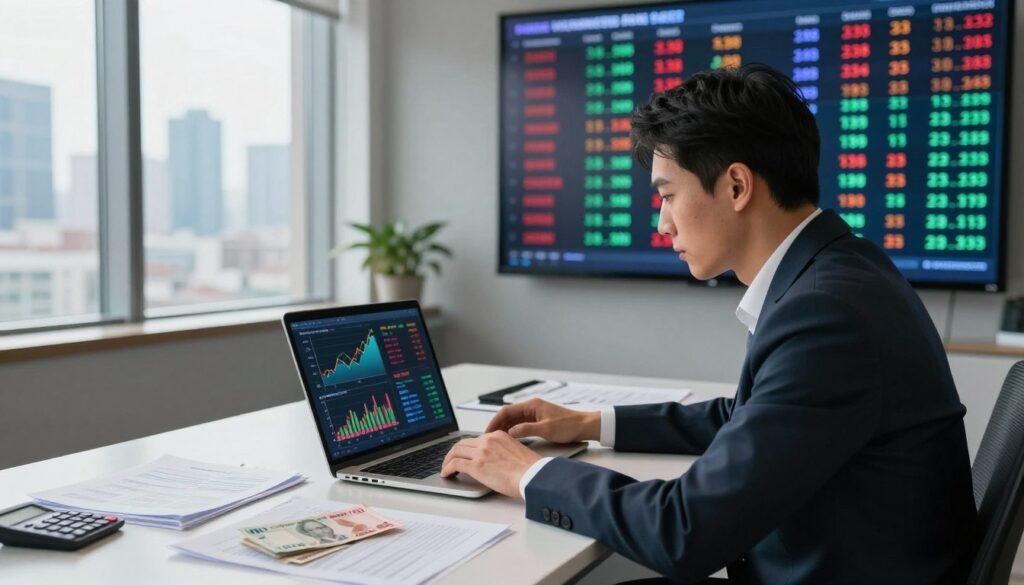
Banks and financial institutions have complex ways to figure out wholesale exchange rates. These rates are different from what most people see. They use a pricing strategy that helps them make money.
To set currency exchange rates, they look at a few important things:
- Current market conditions
- Global economic indicators
- Supply and demand dynamics
- Operational costs
They add a markup to the base rate. This markup helps cover costs and makes a profit.
| Rate Type | Typical Markup | Consumer Impact |
|---|---|---|
| Mid-Market Rate | 0% | Fairest baseline rate |
| Bank Retail Rate | 1-3% | Higher cost for consumers |
| Tourist Exchange Services | 3-5% | Highest markup rates |
Financial institutions adjust their rates to stay competitive and profitable. The markup can change a lot between providers. This means consumers might get different rates for the same exchange.
Knowing how rates are calculated helps consumers make better choices. They can look for the best wholesale exchange rates.
Understanding Mid-Market Exchange Rates in Simple Terms
Currency exchange can seem complex, but it’s easier when you know the basics. Learning about mid-market vs retail rates is key for anyone dealing with international money matters.
The foreign exchange market is all about buying and selling currencies. It’s driven by two main things: bid and ask prices.
The Difference Between Bid and Ask Prices
Think of a currency market where people negotiate prices. The bid price is what buyers are willing to pay. The ask price is what sellers want to get. This difference is called the bid-ask spread.
- Bid Price: The maximum price a buyer will pay
- Ask Price: The minimum price a seller will accept
- Mid-Market Rate: The exact middle between these two prices
How Supply and Demand Determine Currency Values
Currency value isn’t random. It’s based on supply and demand in the economy. Several factors affect these market forces:
- Interest Rates: Higher rates attract more investors
- Economic Performance: A strong GDP makes a currency more attractive
- Political Stability: Safe environments attract more investment
- Inflation Rates: Lower inflation usually strengthens a currency
When more investors want a currency, its value goes up. But if demand drops, its value falls. This shows how complex and global the financial world is.
Why Most People Don’t Get the Mid-Market Rate
Understanding currency conversion fair rates can be tough for most people. When we exchange money, we usually don’t get the mid-market rate. This rate shows the true value of currencies. Financial institutions add costs and profit to this rate.
They use two main ways to add to the mid-market rate:
- Hidden exchange rate margins
- Embedded transaction fees
The mid-market rate is like a wholesale price. Banks and currency exchange services act as intermediaries. They add a premium to cover their costs. Their business model depends on these small margins from many transactions.
How much money you exchange affects the rate you get. Smaller exchanges have higher markups. But, bigger transactions might get rates closer to the mid-market rate. New financial tech companies are changing this by showing fair rates.
The key is understanding how far your exchange rate deviates from the mid-market rate.
To protect yourself, you can:
- Compare rates across different services
- Check the total cost of the transaction
- Use digital platforms with clear fees
Being aware and doing research is key in the complex world of currency exchange. It helps you get the best rates possible.
Common Traps and Hidden Costs in Currency Exchange
Dealing with currency exchange can be tricky. Many hidden costs can surprise travelers and buyers. Financial services often use smart marketing to hide the real cost of money conversion.
Misleading Zero-Fee Offers
Providers of currency exchange may promise “zero-fee” deals. These offers aim to make you think you’re saving money. But, they actually make their profit by changing the exchange rate.
- Zero-fee offers typically hide profits in unfavorable exchange rates
- Actual cost can be much higher than a transparent fee structure
- Consumers end up paying more without realizing it
Inflated Exchange Rates and Profit Margins
Financial institutions often use unclear methods to increase their profits. They make it hard for people to see the real cost of converting money.
| Exchange Location | Typical Markup | Potential Extra Cost |
|---|---|---|
| Airport Exchanges | 5-10% | $50-$100 per $1000 |
| Hotel Currency Services | 7-12% | $70-$120 per $1000 |
| Bank Wire Transfers | 3-5% | $30-$50 per $1000 |
To avoid these traps, always check real-time rates and look beyond the initial fee. Transparency is key when dealing with international currency exchanges. Look for services that clearly state their exchange rates and any extra charges.
👉 Convert USD, EUR, GBP, CAD, and more using our free currency converter
How to Access Fair Exchange Rates for Your Transactions
Finding good currency conversion rates can be tough for many. Smart travelers and those who manage money internationally use smart strategies. They aim to get better exchange rates and avoid extra fees.
To get better conversions, follow these steps:
- Use trusted online currency converters to see real-time rates
- Compare rates from different financial sites
- Think about using multi-currency accounts for international deals
- Watch how exchange rates change before you convert
Digital tools have made finding good currency conversion rates easier. Rate tracking services can tell you when it’s the best time to exchange money. Many online services offer rates that are closer to the real market value than banks.
Here are some tips for better rates:
- Look into different currency exchange services
- Ask for clear rate explanations
- Combine small transactions into bigger ones
- Use tech-based financial services
Technology has changed how we handle international money exchanges. By staying up-to-date and using digital tools, you can cut down on costs. This way, you can make the most of your money.
👉 Convert USD, EUR, GBP, CAD, and more using our free currency converter
Conclusion
Understanding currency exchange can seem complex. But knowing about mid-market rates makes it easier. The mid-market rate is the true value of currencies. It’s key for anyone exchanging money across borders.
When you exchange currencies, watch out for hidden costs and rate changes. By researching mid-market rates, you can make better choices. This way, you avoid extra fees and bad exchange deals. Smart travelers and buyers know that knowing is power in currency deals.
Every currency exchange has its own set of rules and market changes. While getting the exact mid-market rate is rare, knowing the basics helps. Look at rates from different places, compare fees, and keep up with world news. This can really help your money go further.
Disclaimer: This content is for informational purposes only and should not be considered financial advice. Always consult with a professional financial advisor for personalized guidance on currency exchange and international transactions.