Introduction
Have you ever noticed that exchange rates are never the same two days in a row? One day your money converts to more, the next day it converts to less — even if you didn’t do anything different.
That’s because currencies are constantly moving in value.
Every second, banks, businesses, investors, and governments around the world are buying and selling money. These transactions determine how much one currency is worth compared to another.
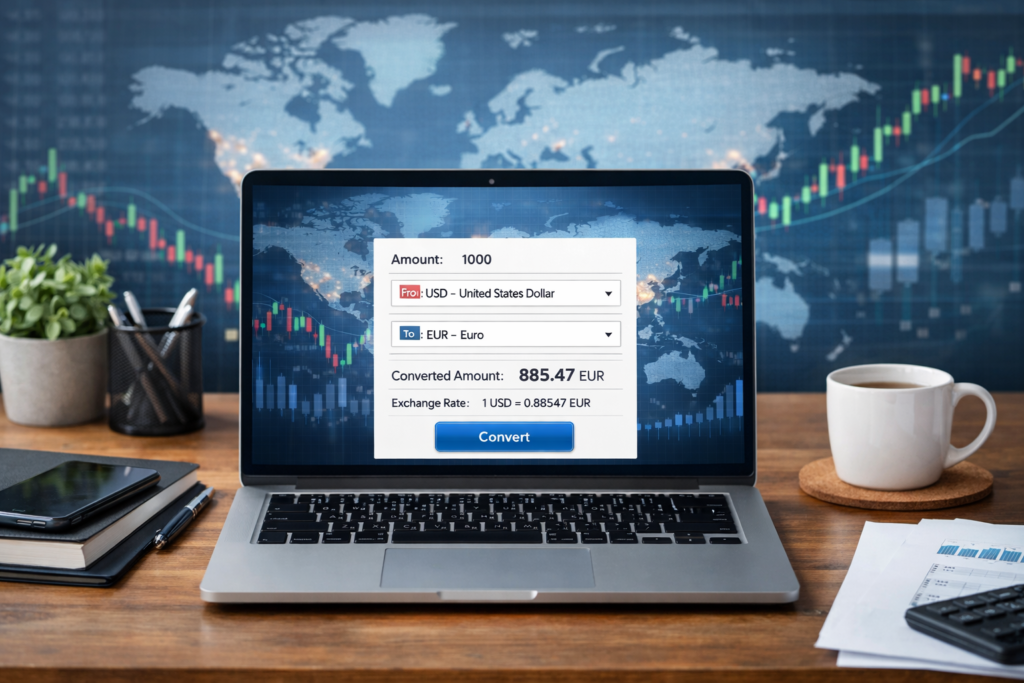
To understand how this works in detail, read our full guide explaining how currency converters calculate rates in real time
Once you understand what drives exchange rates, currency conversion starts to make much more sense.
What Is an Exchange Rate?
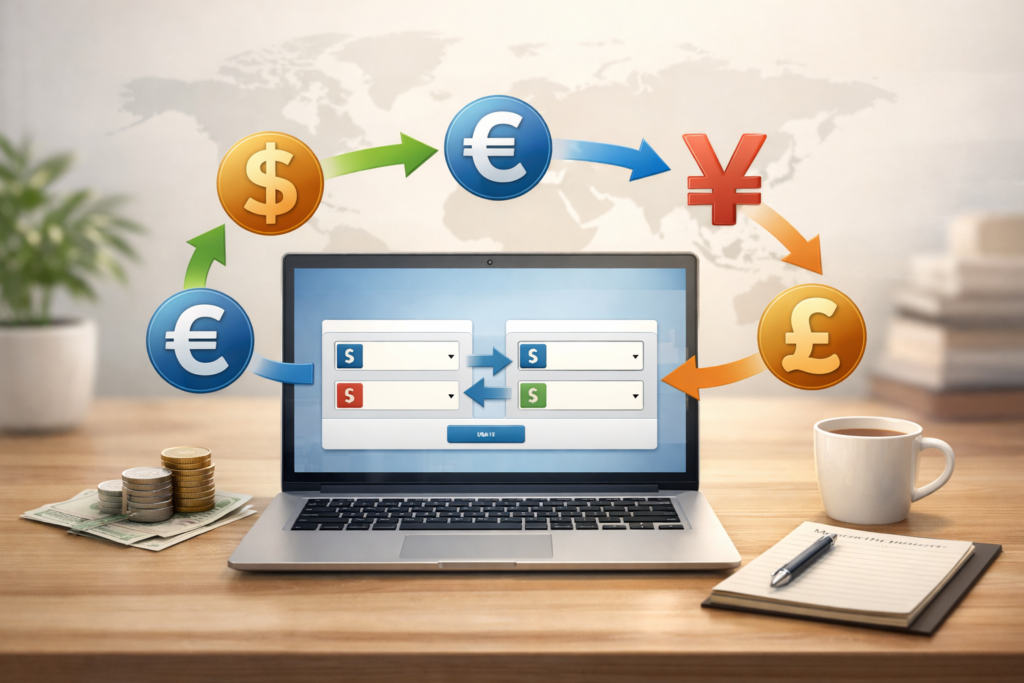
An exchange rate is simply the value of one currency compared to another.
For example:
- 1 US Dollar = a certain amount of Euros
- 1 British Pound = a certain amount of Japanese Yen
This comparison is called a currency pair.
Currencies don’t have fixed prices like products in a store. Instead, their value changes constantly based on global financial activity.
Supply and Demand (The Biggest Factor)
The most important factor affecting exchange rates is supply and demand.
If more people want a currency → its value rises.
If fewer people want it → its value falls.
Example:
If many investors want US Dollars to invest in American businesses, demand increases. Because demand rises, the dollar becomes stronger.
This is the same basic principle as any marketplace.
Interest Rates
Central banks play a major role in currency value through interest rates.
When a country raises interest rates:
- Foreign investors move money there
- Demand for that currency increases
- The currency strengthens
When interest rates drop:
- Investors move money elsewhere
- Demand falls
- The currency weakens
This is why financial news can instantly affect exchange rates.
Inflation
Inflation measures how quickly prices rise in a country.
Countries with low inflation usually have stronger currencies because their purchasing power stays stable.
Countries with high inflation typically see their currency lose value over time because money buys less than before.
This is one of the reasons some currencies steadily weaken while others stay strong.
Economic Performance
Strong economies attract investment.
Things that strengthen a currency:
- Job growth
- Business expansion
- Manufacturing output
- Stable banking systems
When investors believe a country’s economy is growing, they buy that country’s currency to participate in its market.
Political Stability
Investors want safety.
If a country has:
- Government instability
- Policy uncertainty
- Conflict
Investors often move their money elsewhere. When they leave, the currency weakens.
Stable countries usually maintain stronger currencies because global investors trust them.
The Role of Central Banks
Central banks influence currency values directly.
They control:
- Interest rates
- Money supply
- Monetary policy
Sometimes they even buy or sell their own currency in international markets to stabilize its value.
Because of this, announcements from central banks often cause immediate exchange rate changes.
Why Exchange Rates Change Daily
Currencies are traded in the global foreign exchange (forex) market. This market operates 24 hours a day during the business week across different time zones.
As trading continues:
- New economic reports are released
- Investors react
- Prices adjust
That’s why exchange rates rarely stay the same for long.
Why You Should Check Rates Before Converting

Because values constantly change, checking a live rate before exchanging money can make a real difference.
Even small movements matter when:
- Traveling abroad
- Sending international payments
- Shopping online internationally
- Paying foreign invoices
Using a live currency converter helps you avoid unfavorable conversion timing.
👉 Check real-time values instantly here
Conclusion
Exchange rates move for many reasons — not randomly.
They respond to economic conditions, interest rates, inflation, and investor confidence. Understanding these factors helps you better predict currency changes and make smarter financial decisions.
The more you understand how exchange rates work, the more useful a currency converter becomes. Instead of just seeing a number, you’ll understand why that number exists.
Financial Information Disclaimer
This article is for informational and educational purposes only and should not be considered financial or investment advice. Exchange rates change constantly and actual conversion values may vary depending on financial institutions or payment providers. Always confirm rates before completing a transaction.
Educational Disclaimer:
The information on Voltcurrency.com is for educational purposes only and should not be considered financial advice. Always verify exchange rates with your financial provider before making transactions.