Ever wondered why your banking app shows a different currency rate than Google or travel sites? You’re not alone in this puzzle. Currency rate differences are common, confusing travelers and those sending money abroad.
Compare Real-Time Currency Rates Instantly
Rates can differ depending on the platform and timing.
👉 Check live exchange rates instantly using our free currency converter
Planning to send money overseas or going on a trip? Seeing different rates can be frustrating. These rate differences aren’t mistakes. They show the complex world of foreign exchange markets.
Each platform, like banks or online converters, has its own way of figuring out exchange rates. This means you get different rates from different places.
Key Takeaways
- Currency rates vary across platforms due to multiple calculation factors
- Real-time market fluctuations impact exchange rate accuracy
- Different converters use unique data sources and update frequencies
- Banks and financial platforms add individual profit margins
- Understanding rate variations helps make informed financial decisions
Understanding Exchange Rates and How They Work
Currency exchange is a complex yet fascinating world where money transforms across borders. Exchange rate variations play a key role in global financial interactions. They determine how value moves between different monetary systems.
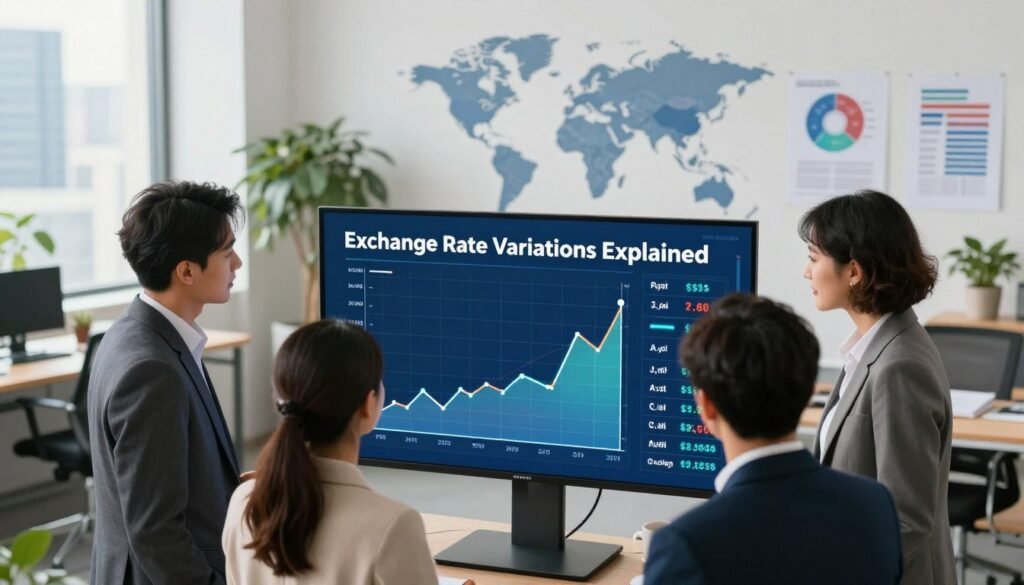
An exchange rate shows the price of one currency in another. These rates change, showing the complex relationships in the forex market.
What Are Exchange Rates?
Currency exchange rates tell you how much of one currency you can buy with another. They are always shown in pairs, like:
- USD/EUR (US Dollar to Euro)
- GBP/USD (British Pound to US Dollar)
- JPY/USD (Japanese Yen to US Dollar)
For example, if the GBP/USD rate is 1.25, you can exchange one British pound for 1.25 US dollars.
Floating vs Fixed Exchange Rates
Exchange rates work under two main systems:
| Floating Rates | Fixed Rates |
|---|---|
| Values change based on market demand | Locked to another currency or commodity |
| Determined by supply and economic conditions | Controlled by government or central bank |
| Most major currencies use this system | Used by some smaller economies |
Floating rates allow currencies to adjust dynamically, reflecting real-time economic conditions and market sentiments.
“Exchange rates are the heartbeat of international finance, constantly pulsing with global economic rhythms.”
Why Different Currency Converters Show Different Rates
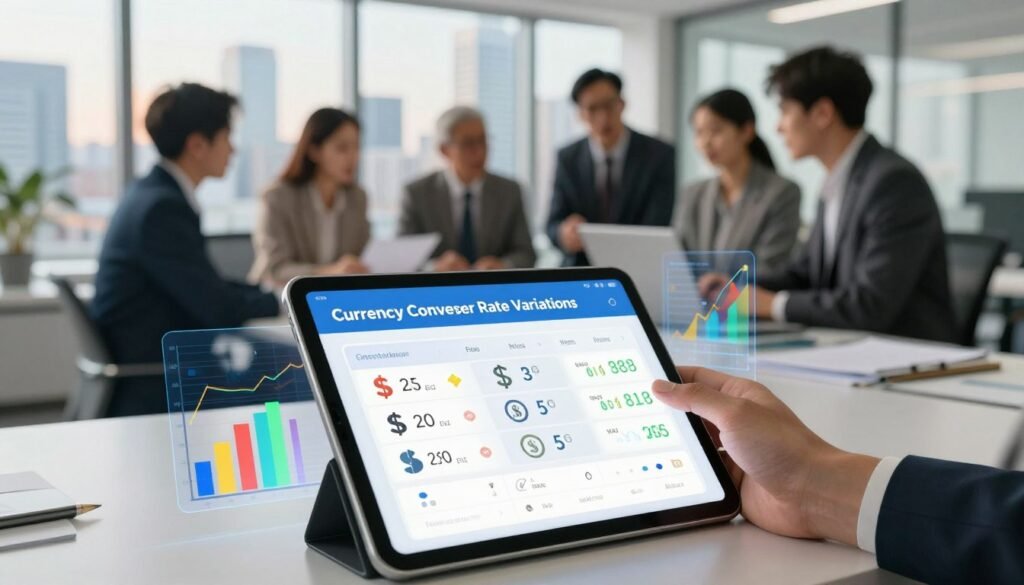
It can be confusing to see different rates on currency converters. Real-time forex rates change often and are influenced by many factors. This leads to differences in rates on different platforms.
The main reasons for these rate differences are:
- Diverse data sources for real-time forex rates
- Update frequency of exchange rate information
- Types of rates displayed (mid-market vs. consumer rates)
- Inclusion of hidden transaction fees
Each currency converter uses its own way to figure out exchange rates. Some get their data straight from banks, while others use updates from financial providers. This can cause small but noticeable differences in rates.
| Converter Type | Rate Update Frequency | Rate Accuracy |
|---|---|---|
| Online Financial Platforms | Real-time (seconds) | High |
| Bank Websites | Hourly | Medium |
| Travel Exchange Services | Daily | Low |
👉 Convert currencies in real time and see today’s exchange rates here
When looking at why rates differ, remember that real-time doesn’t always mean right away. Some update every second, while others update hourly. Things like global financial events and market speculation can also affect rates.
To find the most accurate rates, compare different sources. Also, understand how each platform calculates its rates.
The Role of Interbank Rates vs Consumer Rates
Currency exchange is a complex world. Different rates play key roles in how much money you get when converting currencies. Knowing the difference between interbank and consumer rates helps travelers and buyers understand foreign exchange better.
The financial world has two main levels: the wholesale interbank market and the retail consumer market. These markets work differently, affecting currency conversion margins.
Mid-Market Rates Explained
Mid-market rates are the “perfect” exchange rate at any time. They are the average of buying and selling prices worldwide. Consumers usually see these rates on:
- Financial news websites
- Online currency converters
- Google finance pages
Important: Mid-market rates are rarely the actual rates consumers receive when exchanging money.
How Banks and Money Changers Make Profit
Banks and currency exchange services make money through foreign exchange spreads. They buy and sell currencies at different rates. It’s like a car dealership—buying low and selling high.
They profit in several ways:
- Setting a markup between buying and selling rates
- Charging additional service fees
- Implementing currency conversion margins
For example, if the mid-market rate is 1.10 USD/EUR, a bank might buy euros at 1.08 and sell at 1.12. They keep the difference as profit.
Currency Exchange Spreads and Margins
Understanding currency conversion margins and fees can save a lot of money. The spread is the difference between buying and selling currency prices. This difference affects the total cost of your transaction.
When you exchange money, you face different pricing strategies. These strategies impact the final amount you get. Currency exchange fees can show up in several ways:
- Percentage-based margins on the mid-market rate
- Flat transaction fees
- Hidden markup in exchange rates
Different financial institutions use unique strategies to make money from currency exchanges. Traditional banks often charge higher margins, between 3-6%. Online services, on the other hand, might offer rates between 0.5-3%.
“Not all currency exchanges are created equal. The devil is in the details.”
Several factors affect currency conversion margins:
- Currency pair complexity
- Transaction volume
- Market volatility
- Provider type
Compare Exchange Rates Before You Convert
Exchange rates can change by the minute.
Smart travelers should look at total costs, not just the exchange rate. A good rate might hide big fees. These fees can eat away at your savings.
Factors That Cause Exchange Rate Variations
The forex market is a complex place where currency values change with global economic shifts. Knowing about these changes helps investors and travelers deal with the ups and downs of exchange rates.
Many factors lead to changes in currency values. This creates a dynamic mix of economic forces.
👉 Convert USD, EUR, GBP, CAD, and more using our free currency converter
Interest Rates and Economic Signals
Central banks are key in setting exchange rates through their policies. If a country raises interest rates, it draws more investors looking for better returns.
- Higher interest rates can strengthen a currency
- Inflation impacts currency purchasing power
- Investors follow economic signals closely
Market Speculation and Real-Time Dynamics
The forex market never stops, with traders always reacting to news, data, and mood. These changes can happen fast, in just minutes.
| Factor | Impact on Currency |
|---|---|
| Political Stability | Increases investor confidence |
| Economic Growth | Attracts foreign investment |
| Trade Balance | Influences currency strength |
Traders guess what the future might hold, buying or selling based on expected changes. A simple rumor about interest rates can cause big market moves.
Global events like political tensions or economic crises can lead to sudden and big changes in the forex market.
Bank Rates vs Online Converter Rates
Figuring out international money transfer rates can be tricky. Different places offer different exchange rates. This makes it hard to know which rate is best for your money.
When we look at bank vs online converter rates, we see some big differences:
- Traditional banks usually have wider spreads (2-5% margins)
- Online transfer services often give better rates
- Real-time digital platforms update rates more often
The cost of sending money abroad changes a lot depending on where you go. Banks with physical branches have higher costs. This means they give customers less favorable exchange rates.
| Platform Type | Rate Margin | Update Frequency |
|---|---|---|
| Bank Branches | 2-5% | Hourly/Daily |
| Online Transfer Services | 0.5-2% | Real-time |
| Currency Exchange Kiosks | 5-15% | Infrequent |
Digital platforms use technology to cut costs. This lets them offer better rates for sending money abroad. It’s smart to compare rates from different places before you exchange money.
Smart travelers always check multiple rate sources before transferring money internationally.
Knowing these differences helps people make better choices when exchanging currencies. It’s all about making smart financial decisions.
Conclusion
Understanding currency converters can seem tricky. But knowing about real-time forex rates makes it easier. Discrepancies in currency converters show the fast-changing world of finance. Different sites offer different rates because of how they get their data and how often they update it.
Exchange rates are always moving. The mid-market rate is a starting point. But the rates you actually get include extra fees and spreads. Knowing this helps people traveling or managing money internationally make better choices when they need to change money.
Frequently Asked Questions
Q: Why do currency converters show different rates?
A: Rates change because of how data is gathered, how often it’s updated, and each service’s way of calculating it. Real-time forex rates are always changing, so they differ across services.
Q: How can I get the most accurate exchange rate?
A: Look at several platforms, know what the mid-market rate is, and check the fees for each service. Always check the current rates before you make a transaction.
Disclaimer: This content is for informational purposes only and should not be considered financial advice. Exchange rates change all the time. The rates you get depend on your provider, how much you’re exchanging, and when you do it.